Top 10 AI in Education Trends for 2026
Binit Agarwalla
|
 13 January, 2026
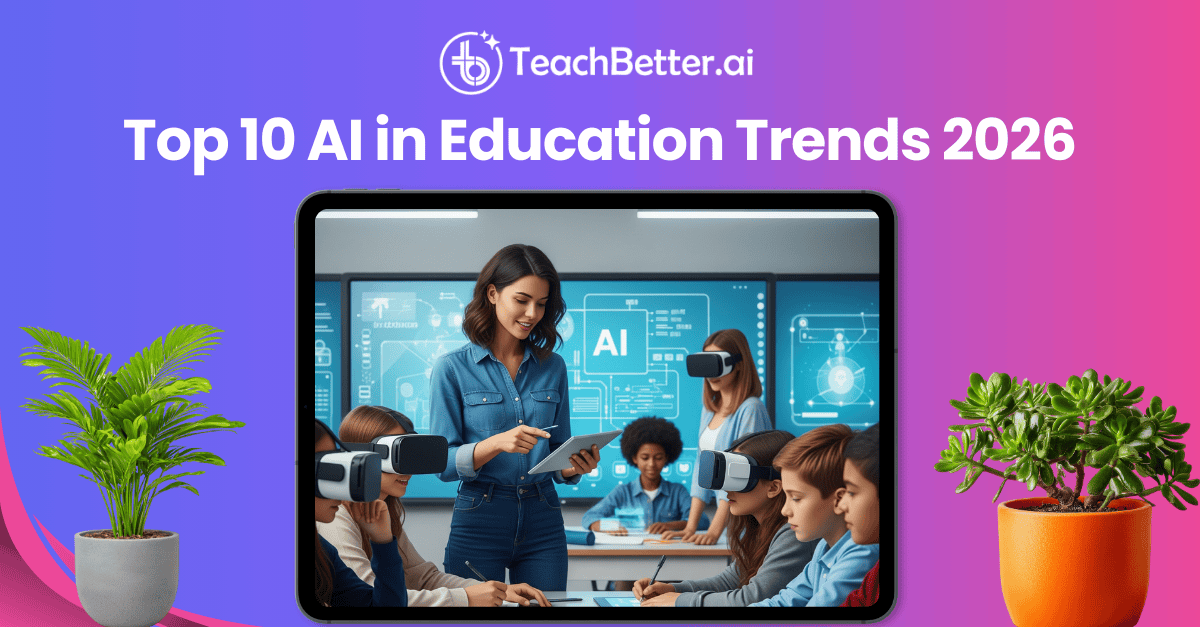
AI trends in education for 2026 reveal a clear shift - from experimental, generic tools to purpose-built platforms that genuinely support teachers and classroom learning. Artificial Intelligence is no longer a novelty in education. Today, it has become a structural force reshaping how teaching happens, how learning is experienced, and how education systems scale across diverse socio-economic contexts. Yet, as AI adoption accelerates globally, a critical distinction has emerged—between AI that merely exists in classrooms and AI that genuinely works for education. Collectively, these AI trends in education 2026 signal a decisive move toward systems that are pedagogy-aware, teacher-first, and built for real classroom conditions.
The early phase of AI in education was characterised by experimentation. Teachers explored generic AI chat interfaces, institutions piloted digital tools, and policymakers cautiously observed from the sidelines. That phase is now over. What we are witnessing today is a deeper, more consequential shift in education. The systems are beginning to demand AI that understands pedagogy, respects classroom realities. This eventually delivers measurable impact without increasing teacher burden.
The following ten trends define how AI in education is evolving in 2026, particularly across India, Asia, and other emerging markets where scale, affordability, and inclusion are non-negotiable.
1. The Rise of Education-Specific AI Platforms Over Generic AI Tools
The most defining trend of 2026 is the clear movement away from generic AI tools toward platforms purpose-built for education. While general AI chatbots demonstrated the potential of language models, they also exposed their limitations in real classrooms. Teachers found themselves spending excessive time crafting prompts, verifying factual accuracy, and adapting outputs to curriculum requirements. Instead of reducing workload, these tools often shifted cognitive effort from lesson planning to AI supervision.
Education-specific AI platforms address this gap by embedding pedagogical structure directly into the system. Rather than asking teachers to instruct the AI how to behave, these platforms already understand learning objectives, grade-level expectations, assessment logic, and instructional flow. The intelligence is contextual, constrained, and aligned by design.
This shift mirrors patterns seen in other high-impact sectors. Healthcare did not adopt generic databases; it adopted clinical systems designed around medical workflows. Education is now following the same path. Schools and teachers increasingly prefer AI platforms that function as instructional infrastructure rather than experimental tools.
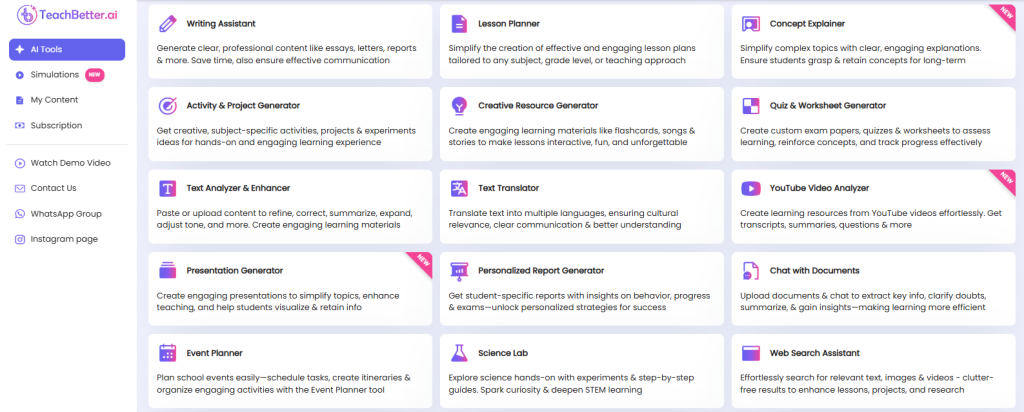
TeachBetter.ai is an example that represents this new generation of education-first AI platforms. Built specifically for teachers, it integrates lesson planning, concept explanation, assessments, presentations, multimedia content, and simulations into a single environment—eliminating the need for prompts, external tools, or technical expertise. This design philosophy reflects a broader industry realisation: AI will scale in education only when it is invisible, intuitive, and instructionally grounded.
2. Teacher-First AI Adoption as the Primary Driver of Sustainable Scale
One of the most important lessons from early AI adoption is that technology does not transform education unless teachers adopt it meaningfully. In many early pilots, AI tools were positioned directly at students, bypassing teachers altogether. While these experiments showed short-term engagement, they struggled to sustain impact because they failed to integrate into classroom workflows.
In 2026, the most successful AI deployments will be those that begin with teachers, not students. Teacher-first AI recognises educators as the primary agents of change within the system. When AI reduces planning time, improves instructional clarity, and supports differentiation, teachers become advocates rather than resistors.
In emerging markets, where classrooms are large and resources limited, this approach is particularly critical. A single teacher equipped with effective AI tools can elevate learning outcomes for hundreds of students. Conversely, AI tools that demand additional effort or technical fluency quickly fall out of use.
Research increasingly shows that teachers adopt AI most readily when it saves them between five and ten hours per week without compromising instructional quality. By 2026, this time-saving metric has become a key predictor of AI retention in schools. AI that empowers teachers strengthens classrooms; AI that overwhelms them will disappear. This shift is one of the most consequential AI trends in education 2026, reinforcing that sustainable adoption begins with empowering teachers, not bypassing them.
3. Moving Systemically from Rote Memorisation to Conceptual Understanding
For decades, education reformers have criticised rote memorisation. Yet, despite policy shifts and curriculum reforms, classroom practice remained largely unchanged. The reason was practical, not philosophical. Teaching for deep understanding requires multiple explanations, contextual examples, formative assessments, and iterative feedback—activities that traditionally demanded far more teacher time.
AI has altered this equation fundamentally. Today, teachers can teach the same concept through stories, real-world analogies, visuals, simulations, and assessments without increasing preparation effort. This capability enables a systemic transition from memorisation to meaning.
This trend aligns closely with reforms such as India’s National Education Policy 2020, which emphasises competency-based learning. What was once aspirational is now operational. AI allows teachers to implement these reforms daily, not occasionally.
The result is a quiet but powerful transformation. Students are no longer limited to memorising definitions for exams; they engage with concepts through application and exploration. Importantly, this shift is occurring not just in elite schools but also in resource-constrained classrooms, where AI compensates for the lack of supplementary materials.
4. Simulation-Based Learning Becomes Central to STEM Education
Another major trend shaping AI in education is the mainstream adoption of simulation-based learning, particularly in STEM subjects. In many schools across Asia and Africa, laboratory infrastructure is inadequate or inaccessible, forcing experiments to be demonstrated theoretically rather than experienced hands-on.
AI-powered simulations eliminate these constraints by allowing students to manipulate variables, observe outcomes, and test hypotheses digitally—making physics laws, chemical reactions, and mathematical relationships visual and interactive rather than abstract and distant.
By 2026, simulations are no longer considered supplementary resources. They are becoming integral to lesson design. Research consistently shows that students who learn through simulations develop stronger conceptual understanding and problem-solving skills than those taught through lecture alone.
This shift is especially impactful for first-generation learners, who often struggle to visualise abstract ideas. Simulations level the playing field by making learning experiential rather than purely textual.
5. Personalised Learning Without Increasing Teacher Workload
Personalised learning has long been an educational ideal constrained by logistical reality. Teachers, managing large classrooms, simply could not individualise instruction manually. As a result, personalisation remained limited to remediation or enrichment programs, often accessible only to a few.
AI has changed this dynamic. By 2026, AI systems analyse student responses continuously, identify learning gaps, and adapt content difficulty in real time. Importantly, this personalisation occurs without requiring teachers to create multiple lesson versions or track individual progress manually.
This development is transformative for classrooms with heterogeneous learning levels. Teachers remain in control of instructional goals, while AI handles differentiation at scale. The result is more equitable learning outcomes, particularly in public education systems where variance in student readiness is high.
6. Safety, Governance, and Distraction-Free Design Become Non-Negotiable
As AI becomes embedded in classrooms, concerns around safety and governance have intensified. Early enthusiasm has given way to more mature scrutiny. Educators and policymakers are now acutely aware of risks related to data privacy, hallucinated content, and digital distraction.
Today, schools increasingly reject AI tools that are open-ended, ad-supported, or connected indiscriminately to the internet. Instead, they favour platforms designed explicitly for education, with built-in safeguards that ensure age-appropriate, curriculum-aligned outputs.
This shift reflects a broader understanding: trust is foundational to educational technology adoption. AI tools that compromise safety or focus undermine institutional confidence, regardless of their technical sophistication.
7. Multilingual AI as a Catalyst for Educational Inclusion
Language remains one of the most persistent barriers to equitable education. Despite widespread digital access, high-quality learning resources have historically been concentrated in English, marginalising millions of learners.
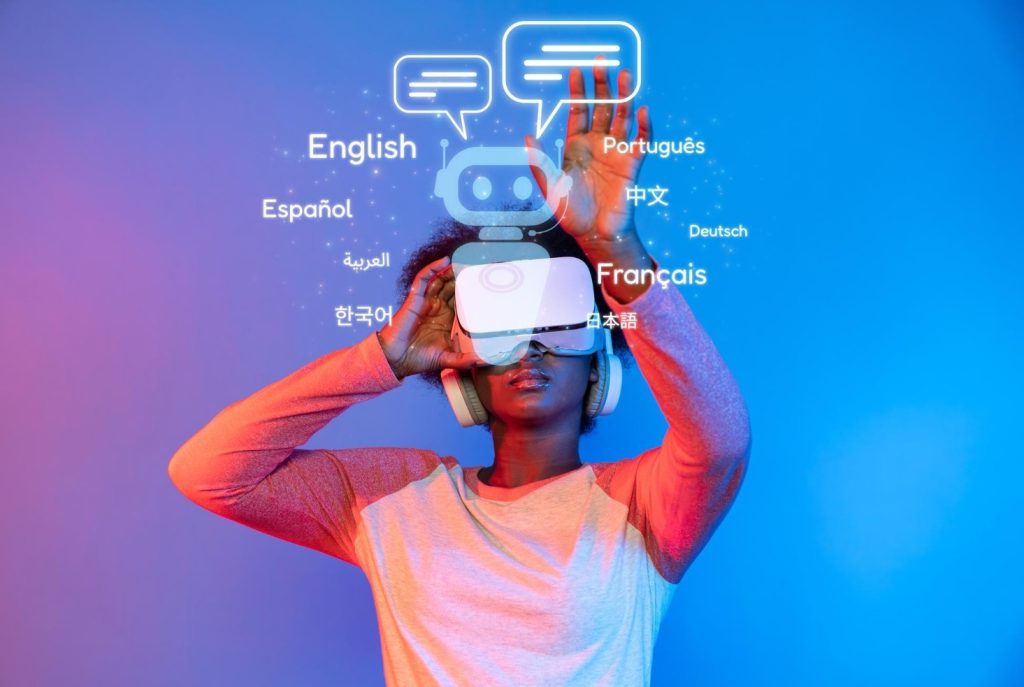
AI has fundamentally altered this landscape. Today, multilingual AI enables instruction, explanation, and assessment in regional and local languages at scale. This capability dramatically improves comprehension and engagement, particularly among first-generation learners.
In countries like India, where linguistic diversity intersects with educational inequality, multilingual AI is not a feature—it is an inclusion strategy. Education systems increasingly recognise that learning in one’s first language strengthens conceptual understanding and reduces dropout rates.
8. Governments Shift from Caution to Structured AI Integration
In most countries, early responses to AI in education were cautious, driven by concerns around misuse, equity, and data privacy. For several years, AI adoption remained fragmented and largely confined to private initiatives. By 2026, this stance has clearly shifted.
Governments are no longer debating whether AI belongs in classrooms, but how it can be deployed responsibly at scale. In India, national frameworks like NEP 2020, along with platforms such as DIKSHA, SWAYAM, and NDEAR, signal a move toward AI as part of public education infrastructure. States including Telangana, Karnataka, Kerala, Odisha, and Maharashtra are actively training teachers on AI-enabled pedagogy, not just tools.
A key change is the emphasis on controlled, education-specific AI platforms over open, generic tools—prioritising curriculum alignment, child safety, multilingual access, and teacher augmentation. AI is no longer viewed as an external disruption in education, but as a structured enabler of teacher effectiveness, personalised learning, and equitable access across urban and rural classrooms.
9. Affordability, Simplicity, and Freemium Models Drive Grassroots Adoption
In emerging markets like India, the success of AI in education is shaped less by technological sophistication and more by affordability, simplicity, and trust. History offers a powerful parallel. The mobile internet revolution in India did not happen because smartphones suddenly became advanced—it happened because Jio redefined pricing, simplified access, and made digital services affordable for the masses. Education technology is now following a similar trajectory.
By 2026, it has become evident that high-cost, enterprise-first AI tools struggle to achieve scale in schools where budgets are constrained and teachers often pay out of pocket. In contrast, freemium models with transparent, low monthly pricing enable teachers to experiment without risk, experience tangible value, and gradually build trust. This bottom-up adoption—teacher by teacher, classroom by classroom—has proven far more sustainable than top-down mandates.
Crucially, affordability in AI education is not just about low prices. It reflects a broader design philosophy: simple interfaces, minimal setup, no prompt engineering, and immediate classroom-ready output. Teachers are willing to invest personally in AI tools that save time and improve learning outcomes—but only when the cost barrier is low and the value is unmistakable. In this sense, affordability is not a compromise; it is the catalyst that enables mass impact at scale.
10. Consolidation Toward All-in-One Education AI Platforms
As AI capabilities grow exponentially, so does complexity. New tools emerge every week—lesson generators, quiz makers, video tools, chatbots, simulators, analytics dashboards. While this innovation is exciting, it creates a hidden burden for teachers. No educator can realistically juggle 10–15 different websites, logins, prompts, and workflows every day, especially in time-constrained classrooms. Expecting mass adoption from such fragmentation ignores a critical truth: not every teacher is equally tech-savvy, nor should they have to be.
By 2026, this reality has driven a clear shift toward all-in-one, education-first AI platforms that bring the best capabilities under one roof. These platforms mirror how teaching actually happens—planning, explaining, visualising, assessing, revising—without forcing educators to switch tools or learn new interfaces constantly. Consolidation reduces cognitive load, ensures consistency in output, and makes AI a daily companion rather than an occasional experiment.
The platforms that succeed are not those with the longest feature lists, but those that are deeply integrated, intuitive, affordable, and classroom-ready from day one. This trend reflects a broader lesson from technology adoption across sectors: innovation scales only when it feels simple. In education especially, simplicity is not a limitation—it is the prerequisite for impact at scale.
Conclusion: The Role of TeachBetter.ai in This New Educational Landscape
Taken together, these AI trends in education 2026 point to a singular conclusion. AI will transform education not by being more powerful, but by being more purposeful.
TeachBetter.ai was built at this intersection—designed as a comprehensive, teacher-first AI platform that combines over 20 AI tools, text plus multimedia content, 100+ interactive simulations across Physics, Chemistry, and Mathematics, and multilingual support across more than 80 languages. By offering all of this under a single, distraction-free, curriculum-aligned interface, it addresses the very challenges that define education in emerging markets.
Most importantly, TeachBetter.ai enables a long-promised shift in education: moving classrooms from rote memorisation to deep conceptual understanding and real-world application—without increasing the workload of already overburdened teachers.
As AI continues to evolve, its impact on education will not be measured by novelty or capability alone, but by accessibility, trust, and sustained classroom adoption. In that future, education-specific AI platforms are not just preferable—they are essential.
Watch TeachBetter.ai 1-minute intro video
Source: This article is originally published on Medium.

Binit Agarwalla, Founder, TeachBetter.ai
With over 15 years of seasoned expertise, Binit is a results-driven marketing leader specializing in B2B SaaS and B2C growth strategy - now channeling that experience into transforming education through TeachBetter.ai, an all-in-one AI platform built exclusively for teachers, students, and schools.
As the Founder of TeachBetter.ai, his mission is to simplify teaching and amplify learning by empowering educators with AI-driven tools that save time, enhance creativity, and make classrooms more engaging. TeachBetter.ai's vision is to make AI adoption in education simple, accessible, and affordable - helping every teacher leverage the power of AI without complexity or high cost.
Read other articles authored by Binit Agarwalla here.