Why Driving AI Awareness in Schools Is Critical for the Future of Education
Vipin Kumar
|
 21 January, 2026
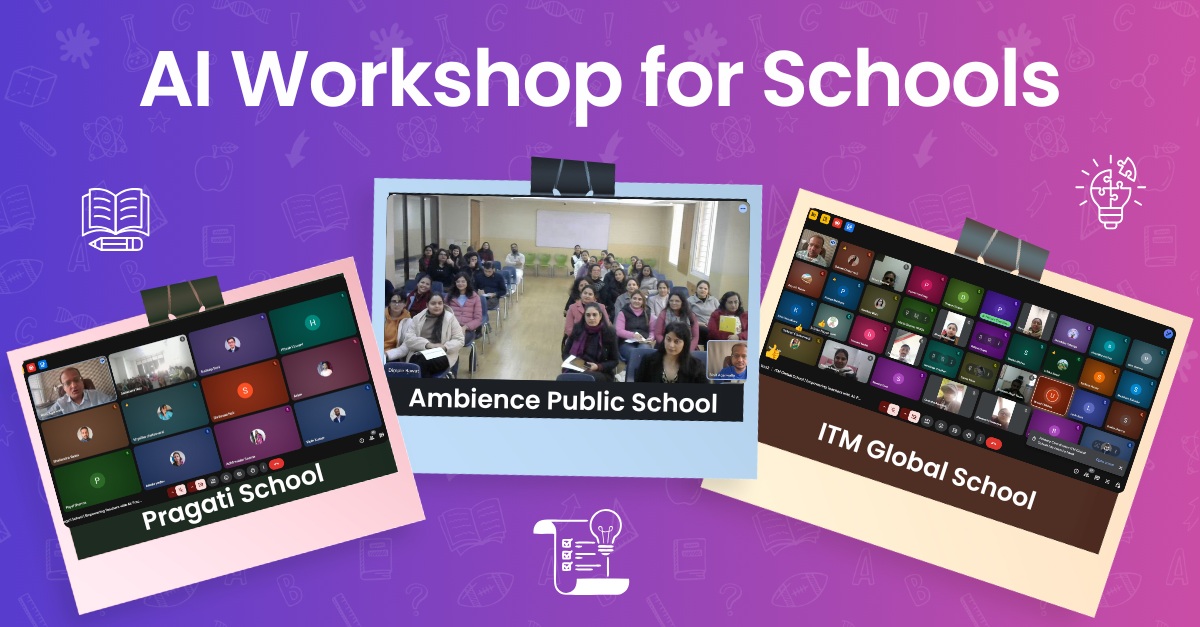
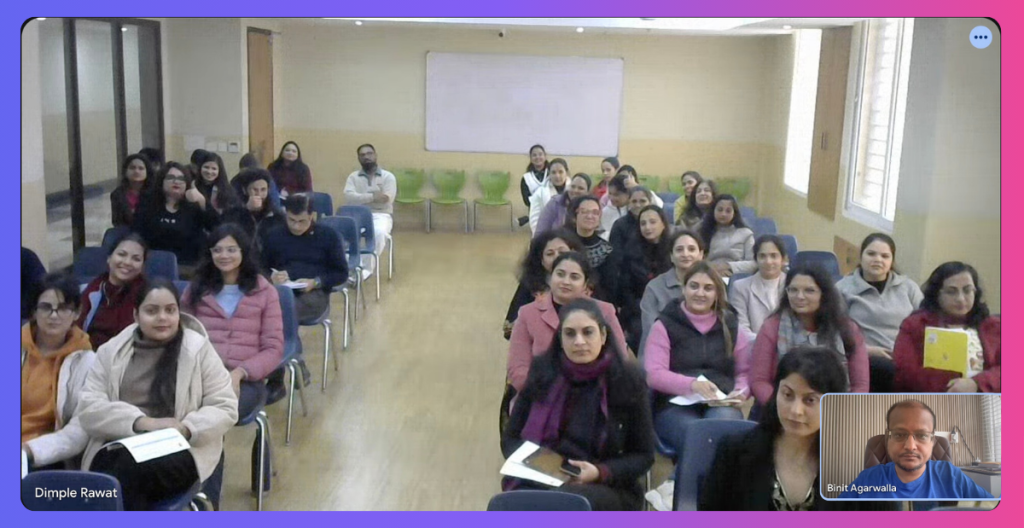
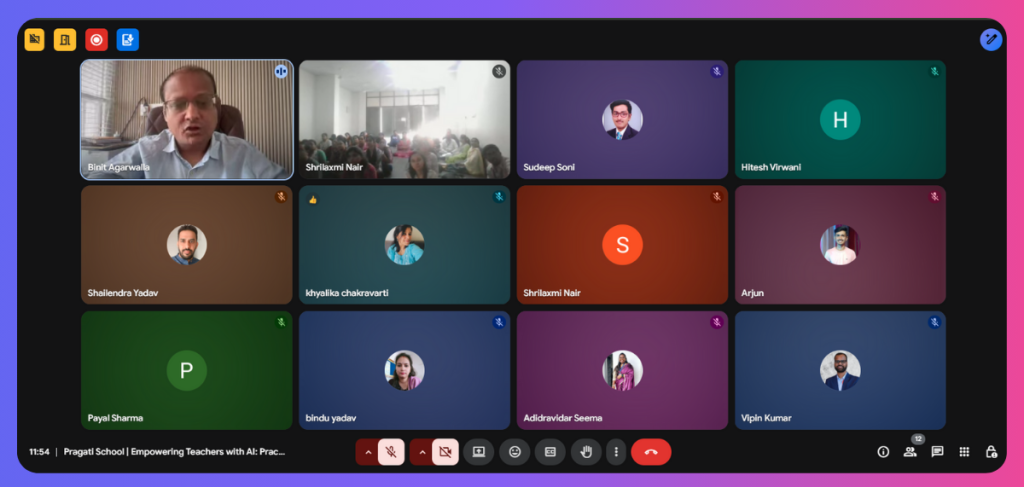
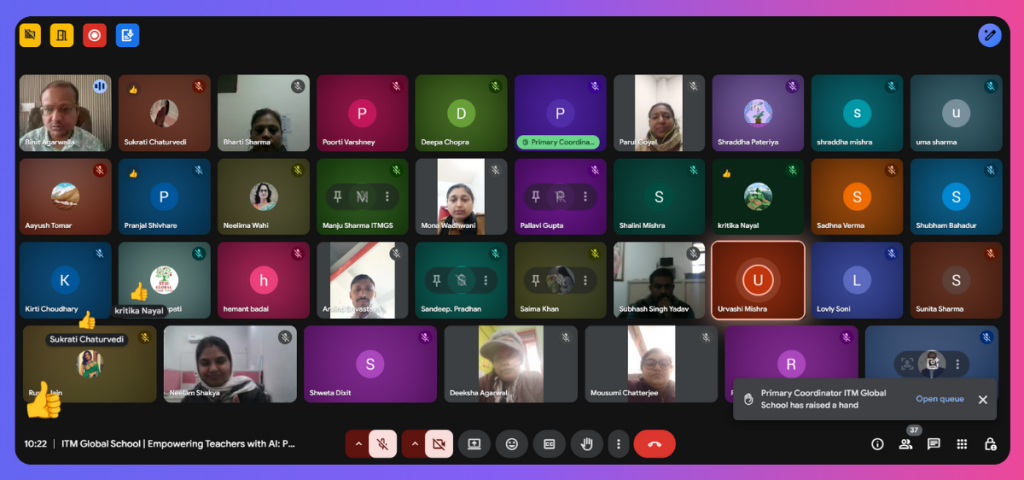
At TeachBetter.ai, our mission is to enable the mass adoption of artificial intelligence in education, ensuring that schools and teachers across the globe can benefit meaningfully from the power of AI. We believe that for AI to truly create impact in classrooms, it must be introduced in a way that is simple, responsible, and deeply aligned with the realities of teaching and learning. In pursuit of this mission, we have been conducting live, online AI workshops for schools, designed specifically to build awareness and confidence among teachers. These sessions have been delivered as free AI workshops for teachers, with a strong focus on practical classroom relevance rather than technical complexity. As part of this initiative, we have worked closely with schools such as Pragati School, ITM Global School, and Ambience Public School, engaging educators across subjects and grade levels through interactive online sessions.
These workshops were not product demonstrations or technical training programs. Instead, they were thoughtfully structured conversations around how artificial intelligence is reshaping education, what it realistically means for teachers in everyday classrooms, and how schools can introduce AI in a manner that is pedagogy-first, responsible, and accessible. Teachers participated actively, bringing real classroom challenges, questions, and perspectives into the discussion.
A consistent insight emerged across these workshops—and across sessions conducted for more than 10 schools in total: the primary challenge schools face today is not resistance to AI, but the absence of structured AI awareness. Without clarity, guidance, and institutional support, AI adoption either remains superficial or is avoided altogether. This article brings together the collective learnings from these workshops and explains why driving AI awareness in schools is no longer optional, but a strategic necessity for shaping the future of education.
The Education System Is Undergoing a Fundamental Shift
To understand why AI awareness is so important, it is necessary to first understand the broader transformation education is undergoing. For decades, formal education systems were designed around one fundamental constraint: information scarcity. Teachers were the primary source of knowledge, textbooks were limited, and access to information was controlled.
In that environment, memorisation was not only logical—it was essential. A student who could remember more facts, formulas, and definitions was considered more capable. Assessment systems were built to reward recall, and teaching methodologies evolved accordingly.
That context no longer exists. Today, information is abundant and instantly accessible. Students can find explanations, examples, and answers within seconds. In such a world, memorisation alone holds diminishing value. What matters instead is how well students understand concepts, apply them in real-world situations, and think critically about what they learn.
This shift—from memorisation to application—fundamentally changes the role of teachers. Teaching is no longer about delivering information. It is about designing learning experiences that connect theory to reality, encourage curiosity, and build lifelong thinking skills.
However, this evolution also increases the cognitive and preparatory load on teachers. Creating engaging lessons with stories, examples, visuals, activities, simulations, and assessments requires time and resources that most educators simply do not have. Without support, this shift risks becoming aspirational rather than achievable.
Why AI Awareness Matters More Than AI Adoption
In conversations around education technology, adoption is often treated as the goal. Schools ask whether teachers are using AI, which tools they are using, and how frequently. However, our workshops revealed a more important truth: AI adoption without AI awareness is fragile and unsustainable.
Many teachers have already experimented with AI tools. Some use them to generate lesson plans, others to draft worksheets or explanations. Yet, without a clear understanding of how AI works, where it adds value, and where it must be used cautiously, usage remains superficial.
AI awareness provides context. It helps teachers understand that AI is not a shortcut to avoid teaching, nor a threat to their professional relevance. Instead, it is a support system—one that can reduce repetitive effort while allowing teachers to focus more on creativity, connection, and instruction.
During the workshops, significant time was dedicated to reframing AI as a teaching enhancement tool, not an automation replacement. When teachers internalise this distinction, their relationship with AI changes. Fear gives way to curiosity. Resistance turns into experimentation. Most importantly, teachers regain a sense of control.
The Hidden Barrier: Complexity in Educational Technology
One of the most consistent themes across all workshops was teacher fatigue—not with teaching itself, but with complexity. Educators are already balancing lesson delivery, assessments, administrative tasks, parent communication, and institutional requirements. Asking them to also master complex technologies is often unrealistic.
This is where many AI initiatives fail in schools. When technology:
- requires extensive training,
- assumes technical fluency,
- or demands experimentation outside working hours,
it unintentionally excludes a large portion of educators.
In education, simplicity is not a convenience—it is a prerequisite for scale. Teachers do not need to understand the mechanics of AI models. They need tools and workflows that map directly to what they already do every day.
The workshops were intentionally designed to demonstrate AI in the simplest possible form. No prompt engineering. No abstract theory. Every demonstration started with a familiar classroom task and showed how AI could support it in minutes. This approach immediately lowered resistance and increased confidence.
Why Practical, Bite-Sized Learning Experiences Matter for Teachers
One of the most important insights from these workshops was understanding how teachers meaningfully engage with new and emerging technologies. Traditional professional development models—long training programs, certifications, or multi-week courses—are often misaligned with the realities of a teacher’s day-to-day responsibilities, especially when dealing with fast-evolving technologies like AI.
Teachers benefit most when learning is contextual, focused, and immediately relevant to their classrooms. Rather than being introduced to AI as a broad or abstract concept, educators engage more confidently when they can explore one clear idea at a time—rooted in a real classroom challenge and demonstrated live. This approach allows teachers to see not just what a technology can do, but how it fits into their existing teaching practices.
For this reason, each workshop was intentionally designed as a 60-minute live, hands-on session. Teachers were not expected to master everything in a single sitting. Instead, they were guided through practical use cases such as lesson preparation, assessment creation, concept explanation, and classroom engagement—showing how AI can support everyday teaching tasks without adding complexity.
What These AI Workshops for Teachers Were Designed to Do
It is important to clarify what these workshops were—and what they were not. These were not sales presentations. They were not technical trainings. This free AI workshop for teachers was intentionally designed to focus on awareness, confidence-building, and real classroom application rather than technical depth or tool-specific training.
The workshops focused on:
- explaining why AI matters in education today,
- addressing fears around misuse and job displacement,
- demonstrating practical classroom applications,
- and reinforcing the teacher’s central role in learning.
By keeping the sessions interactive and grounded in real teaching scenarios, educators could relate immediately. Questions were encouraged, doubts were addressed openly, and discussions were anchored in classroom realities rather than future speculation.
The outcome was not just awareness, but alignment. Teachers left with a clearer mental model of how AI fits into their profession.
The Strategic Role Schools Must Play in AI Awareness
AI will enter classrooms—regardless of institutional readiness. Students are already exposed to AI-driven systems outside school, and teachers will inevitably encounter AI tools through informal channels. The question is whether schools will lead this transition or react to it.
When schools take ownership of AI awareness:
- teachers feel supported rather than isolated,
- usage remains consistent and responsible,
- and learning outcomes improve over time.
When schools delay, adoption becomes fragmented. Some teachers move ahead, others hesitate, and students experience inconsistency. Over time, this gap can erode trust in the classroom and diminish the relevance of formal education.
Driving AI awareness at the school level is not about enforcing usage. It is about creating a shared understanding, a common vocabulary, and a safe environment for exploration. It signals that the institution is future-ready and committed to teacher empowerment.
Making AI Accessible Without Diluting Pedagogy
One concern frequently raised during the workshops was whether AI might dilute pedagogical rigor. This is a valid concern—but it stems from misunderstanding AI’s role. When used thoughtfully, AI does not replace pedagogy; it strengthens it.
AI can handle repetitive tasks, generate first drafts, and provide scaffolding. Teachers remain responsible for judgment, contextualisation, and instructional design. In fact, by reducing mechanical effort, AI gives teachers more time to focus on what truly matters: student understanding, engagement, and growth.
This balance—between automation and pedagogy—was a central theme across all sessions. Teachers responded positively when they realised AI was there to support their expertise, not undermine it.
Why Free AI Workshops for Schools Matter
Offering these workshops as free sessions for schools was a deliberate choice. Awareness cannot be gated behind budgets or procurement cycles. Schools at different stages of digital maturity need equal access to foundational understanding.
Free workshops lower the barrier to entry. They allow schools to explore AI without risk or obligation. They also create space for honest dialogue—something that is often missing in paid, outcome-driven training programs.
The goal of these workshops was not conversion, but confidence. When teachers feel confident, adoption follows naturally.
Bringing AI Awareness to Your School
This free AI workshop for teachers helps schools introduce artificial intelligence in a structured, practical, and pedagogy-first manner. As conversations around AI in education continue to accelerate, schools are increasingly recognising the need for structured, teacher-first AI awareness initiatives rather than ad hoc exposure or isolated experimentation. In response to this need, we continue to offer live, free AI workshop for teachers, designed specifically for schools and delivered in a format that prioritises clarity, practicality, and confidence-building.
Each workshop is a 60-minute live online session, thoughtfully structured to accommodate teachers with varying levels of digital familiarity. Rather than focusing on technical depth or theoretical explanations, the sessions are grounded in real classroom use cases—lesson preparation, assessment design, concept explanation, and student engagement. The objective is to help teachers clearly understand where AI adds value in their daily work and how it can be used responsibly without increasing complexity or workload.
If your school would like to host a similar free, interactive AI awareness workshop for teachers, you can connect with us here:

The Road Ahead: AI as a Pedagogical Ally
The future of education will not be shaped by technology alone. It will be shaped by how thoughtfully technology is introduced, contextualised, and governed within classrooms. Artificial intelligence, like every major technological shift before it, carries both promise and risk. Its impact will depend entirely on the choices schools make today.
When approached intentionally, AI can serve as a powerful pedagogical ally—supporting teachers in designing richer learning experiences, personalising instruction, and focusing more time on student understanding rather than administrative effort. When approached without guidance, it risks creating inconsistency, confusion, and widening gaps between classrooms.
AI will continue to evolve. Tools will change. Capabilities will expand. Yet one truth remains constant: teachers who are confident, informed, and supported will always remain at the heart of meaningful education. By investing in awareness today, schools can ensure that AI strengthens—not disrupts—the human core of teaching and learning.

Vipin Kumar, Co-Founder, TeachBetter.ai
Vipin Kumar is building TeachBetter.ai to create intuitive AI tools that simplify teaching and enhance learning outcomes. With prior experience at global technology companies, he brings a deep understanding of scalable systems, user needs, and practical digital solutions. His mission is to make AI adoption in education easy, affordable, and truly impactful for teachers everywhere. He is committed to creating AI solutions that save time, boost creativity, and empower educators to focus on what matters most—teaching.
Read other articles authored by Vipin Kumar here.